At https://moonshinerecipe.org/vodka-recipe/, we spend a lot of time talking about the art of making spirits—the mashes, the fermentation, and the careful distillation that turns humble ingredients into something memorable. Today, we’re diving deep into the world of vodka, one of the most popular spirits on the planet.
Whether you’re a home distiller looking to expand your skills or simply a cocktail enthusiast who wants to understand what’s actually in your glass, this guide covers everything from the traditional methods used centuries ago to the latest innovations shaping the industry today.
What Is Vodka Made From?
Here’s the thing about vodka that surprises most people: you can make it from almost anything with sugar or starch. The most common bases include:
Grains – Rye, wheat, barley, and corn are the most popular choices
PINTEREST
INSTAGRAM
I'm so excited to prepare so many #recipes of #drinks, #cocktails, #Moonshine, #food - I'm ready to get down to work! #MoonshinerecipePotatoes – A classic base, particularly in Poland
Fruits – Grapes, apples, and other fruits
Other sources – Sugar beets, honey, maple sap, and even discarded baked goods
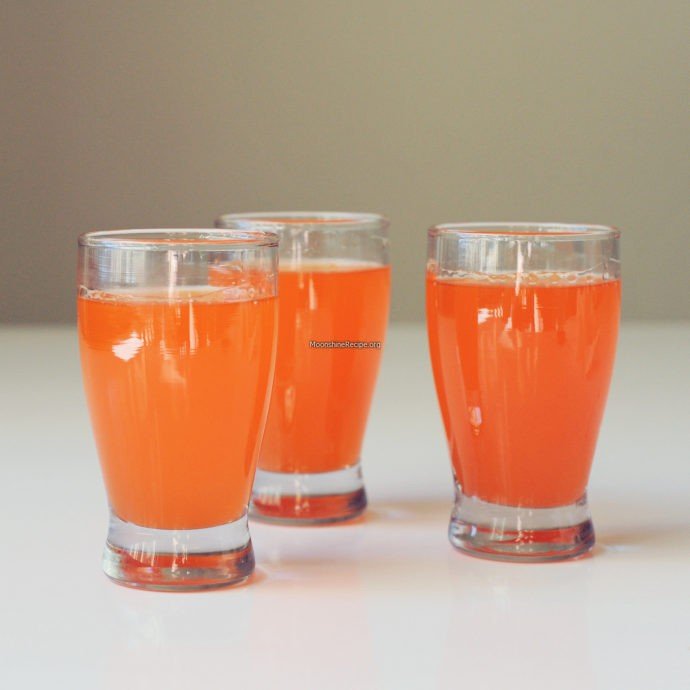
Fun fact: Before the 2020 rule change in the US, vodka was legally required to be “without distinctive character, aroma, taste, or color”. Today, craft distillers are embracing the natural flavors that come from unique base ingredients—think maple syrup vodka from Vermont or rice vodka from Louisiana.
The Traditional Vodka-Making Process
Let’s start with how vodka has been made for centuries. The core steps haven’t changed much, even if the technology has evolved.
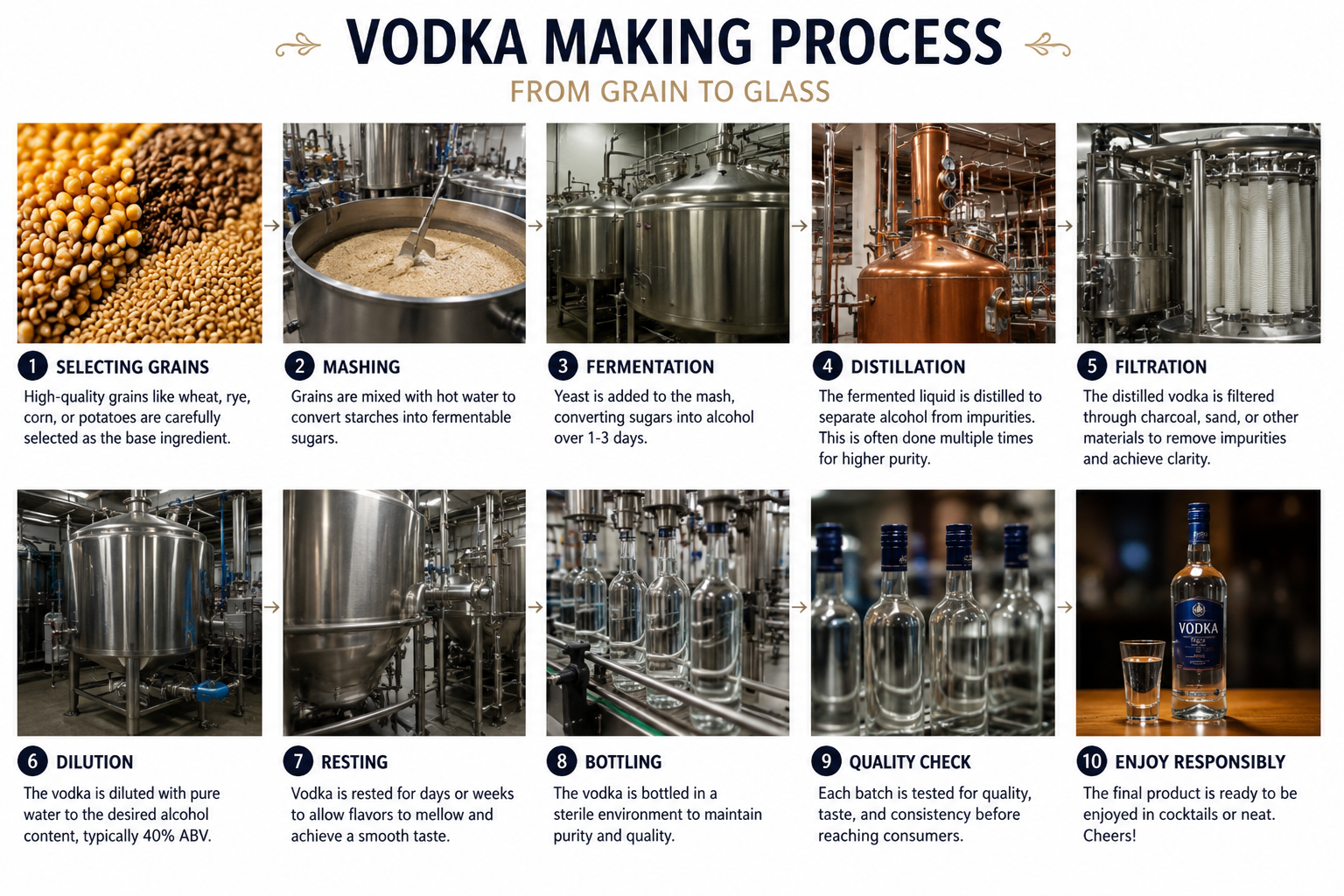
Step 1: Fermentation
The journey begins with creating a “mash.” The base ingredient is mixed with water and heated.
Here’s the key distinction: Some ingredients already contain fermentable sugars (like fruits or molasses). Others—like grains and potatoes—are packed with starches that need to be broken down first. This process is called saccharification.
Enzymes are added to the mash to convert starches into fermentable sugars
These enzymes can come from malted grains or be added separately
Once the sugars are ready, yeast is added. The yeast consumes the sugars through anaerobic fermentation, producing ethanol (alcohol) and carbon dioxide. This process typically takes 1-2 weeks at temperatures between 25-30°C (77-86°F).
The result is a liquid called the “wash,” which contains about 6-10% alcohol by volume (ABV).
Step 2: Distillation
The wash is strained to remove solid residues, then it’s time to concentrate that alcohol.
Traditional Method (Pot Still): Early vodka makers used copper pot stills—the same equipment used for whiskey and brandy. The wash was heated, and the alcohol vapors rose, condensed, and were collected. This was a batch process, and distillers would run it multiple times to achieve higher purity.
The Game-Changer—Continuous Distillation: In 1830, the invention of the Coffey still revolutionized production. This column still allowed for continuous distillation, meaning producers could feed in mash constantly rather than running individual batches. Modern setups often use multiple columns (up to five) to remove impurities like fusel oils and methanol.
By law, vodka must be distilled to at least 95-96% ABV. At this point, it’s nearly pure alcohol with minimal flavor compounds.
Step 3: Filtration
This is where vodka gets its signature smooth, clean character.
The tradition of charcoal filtration dates back to the 18th century when Russian chemist Theodore Lowitz invented the process. The distillate is passed through activated charcoal or carbon filters that absorb remaining impurities and congeners (flavor compounds).
Different producers use different types of carbon:
Some use charcoal made from Sussex oak trees
Others use carbon derived from peat found in Dutch polders
Some distillers use a single filter; others run the spirit through a series of filters. Many brands keep their filtration methods as closely guarded secrets.
Step 4: Dilution and Bottling
After distillation and filtration, the spirit is at nearly 190 proof—undrinkable in that state.
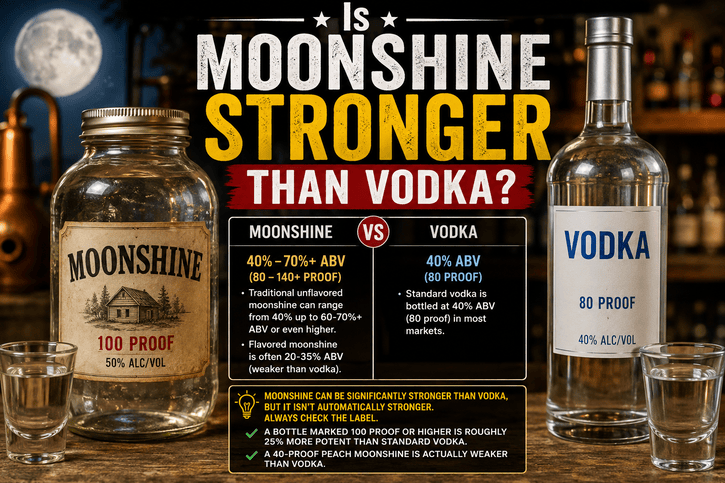
High-quality water is added to bring the ABV down to around 40% (80 proof). The quality of this water is crucial—after all, it makes up about 60% of the final product. Distillers often go to great lengths to filter, soften, and purify their water, and the subtle differences in minerality can affect the final taste.
Some producers also add small amounts of sugar, glycerin, or citric acid to adjust mouthfeel or taste.
And that’s it—no aging required. Most vodka is bottled and shipped straight away.
The Old Process vs. The Latest Innovations
The Old Way (Pre-19th Century)
Pot stills – Batch distillation, slow and labor-intensive
Limited filtration – Basic charcoal filtration introduced in the 1700s
Small-scale production – A few liters per day
Local raw materials – Whatever grains or potatoes were available regionally
The Modern Process (19th Century Onward)
Continuous column distillation – Multiple columns for higher purity and volume
Advanced filtration – Proprietary activated carbon blends, sometimes combined with quartz, silver, or even diamonds
Industrial scale – Hundreds of liters per shift
Digital quality control – Real-time monitoring and electronic documentation
The Cutting Edge (Today’s Innovations)
The vodka industry is undergoing a fascinating transformation, driven by craft distillers and changing consumer expectations.
1. Flavor from the Base, Not Additives
The 2020 rule change freed distillers to showcase the natural flavors of their base ingredients. Today, you’ll find vodkas made from:
Maple sap – Vermont Gold Vodka, described as “viscous and clean, with hints of butterscotch”
Honey – Supporting local apiaries while creating unique flavor profiles
Rice – J.T. Meleck Distillery in Louisiana uses rice from a family farm
Discarded baked goods – Misadventure & Co. makes vodka from expired bread, bagels, and even cheesecake
Pacific Northwest apples – Clear Creek Distillery uses 14 different apple varieties
2. Advanced Filtration Technology
Some distilleries are taking filtration to the next level. Nemiroff, for example, recently replaced their filtration system after testing over 40 different activated carbon samples, developing a proprietary blend that maintains their signature taste while adapting to supply chain changes. They also don’t use distillation at all—focusing entirely on superior filtration to preserve the natural character of the grain spirit.
3. Sustainability and Local Sourcing
Producers are increasingly focused on sustainability:
Regenerative agriculture – Koskenkorva uses farming methods that actually capture CO2
Zero waste – Some distilleries achieve a 99.9% recycling rate, using leftover grain husks for power generation
Local ingredients – Farm-to-bottle is becoming a reality with regional grains, fruits, and honey
4. Premiumization and “Flavored” Vodkas
The trend toward premium, craft vodkas is strong. Brands are differentiating themselves through:
Exquisite bottle designs – More artistic, purist packaging
Natural flavor infusions – Real berries, citrus, herbs, and spices (not artificial)
Lower ABV options – Around 20% ABV for lighter cocktails and fewer calories
The Global Vodka Landscape: A Quick Tour
Vodka’s history is deeply rooted in Eastern Europe, but today it’s a global spirit.
Poland – Claims the first documented use of “wódka” in 1405. Polish vodka is traditionally made from rye, but potato is also common. Polish producers have a long tradition of flavoring with fruit and herbs.
Russia – The first Russian vodka recipe was created by the monk Isidore in 1430. Russian aristocrats monopolized production until the Bolshevik revolution of 1917, when leading distillers like Vladimir Smirnov fled and introduced vodka to the West.
United States – Vodka didn’t enter the US mainstream until after World War I. It took off in the 1940s with the creation of the Moscow Mule cocktail, which reportedly launched a cocktail revolution that swept America. Today, Tito’s Handmade Vodka and other craft brands are leading the “field to bottle” movement.
Fun Fact: Before 1955, vodka was illegal to buy in Minnesota. It was “perceived as hard to detect on the breath,” so lawmakers decided to ban it.
What This Means for Home Distillers and Mixologists
Here at https://moonshinerecipe.org/, we believe understanding the process helps you appreciate the final product—whether you’re making it yourself or just mixing a cocktail.
If you’re thinking about making vodka at home:
You’ll need a column still to reach the high proof required
Filtration is non-negotiable for a smooth, clean spirit
The quality of your water matters as much as the quality of your alcohol
If you’re mixing with vodka:
Try vodkas made from different bases—rye, wheat, potato, and corn all have subtle differences
Premium craft vodkas can add character to cocktails that cheap neutral spirits can’t match
The “craft vodka movement” has made it an exciting time to be a vodka drinker
What’s your favorite vodka base? Have you tried any craft vodkas made from unusual ingredients? Drop a comment below and share your experience with the community!
For more recipes, DIY distilling tips, and cocktail inspiration, keep browsing https://moonshinerecipe.org/. Remember—knowledge is the first ingredient in every great spirit. Drink responsibly, and always share with good company!
[gs_pinterest id=1]